





A useful NZ privacy portfolio project can demonstrate how you reason about account access, data purpose and communication. The Manage My Health inquiry offers a local source for those questions. It does not provide permission to use patient records, reproduce leaked material or test the real service.
This guide proposes a wholly fictional portal exercise: four account states, a data-purpose register, a communication plan and twelve synthetic test cases. The test plan is proposed, not executed. Its purpose is to make decisions traceable, not to certify legal compliance or promise a job.
What the final inquiry contributes
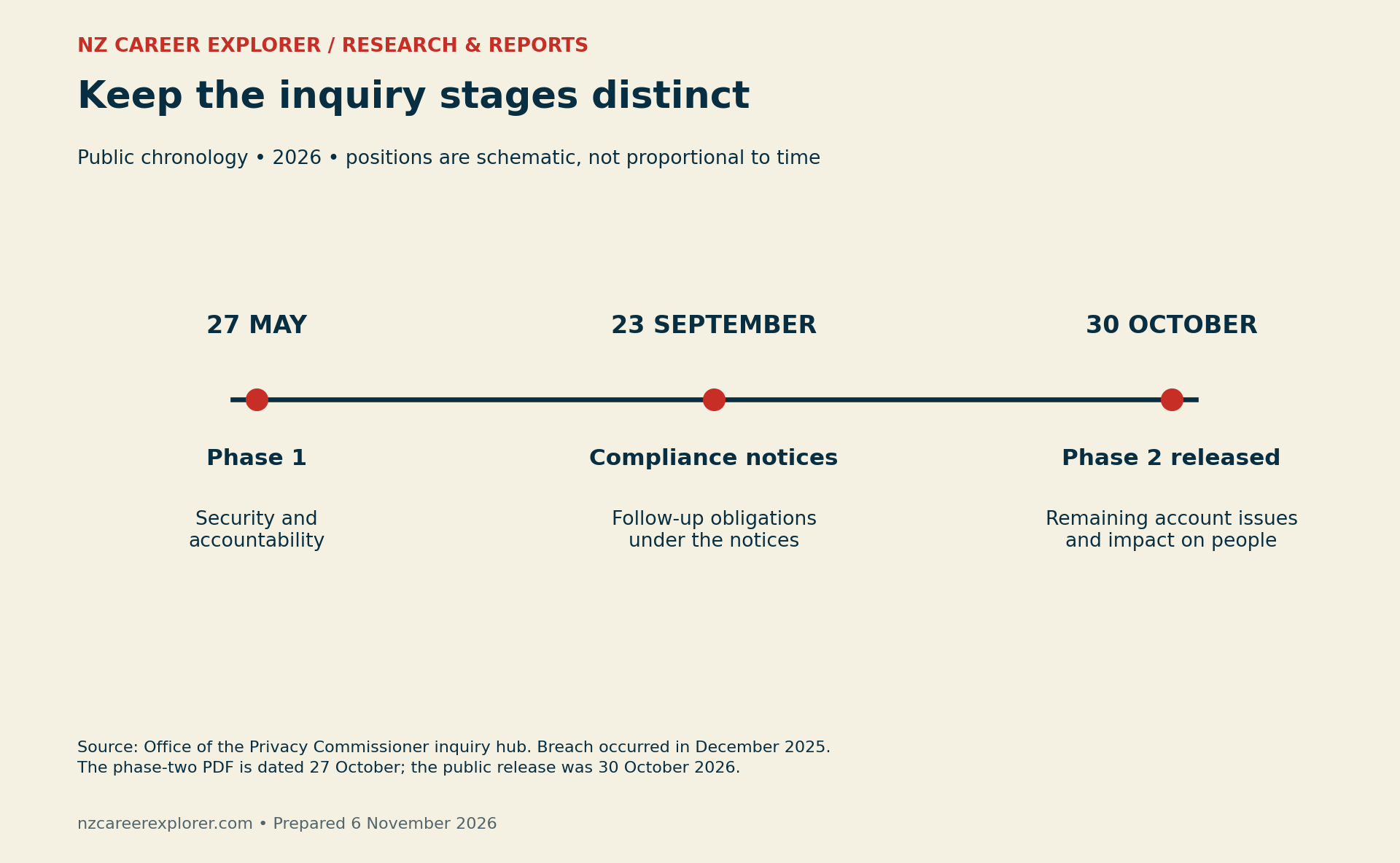
The Office of the Privacy Commissioner published its final phase-two material on 30 October 2026. It addresses account authorisation, retention, communication and the impact of the December 2025 breach. Phase one examined security and accountability; the later phase should not be presented as a new audit of every technical control.
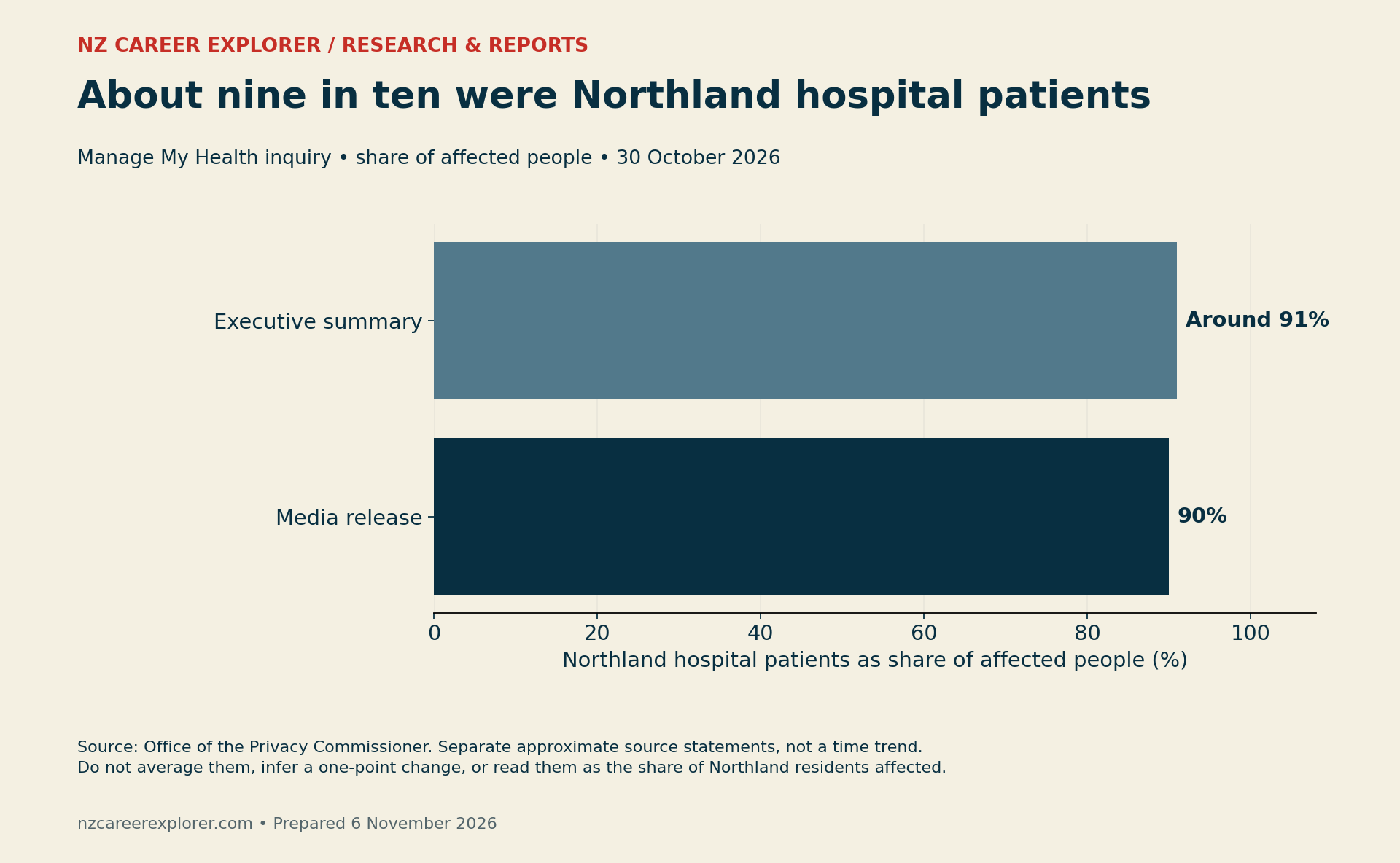
The official media release states that 90% of affected people were Northland hospital patients. The executive summary says around 91%. We describe this as about nine in ten, while retaining the two attributed statements below. We do not average them or interpret the difference as a change over time.
The inquiry also explains why the effects extend beyond stolen documents. For a portfolio, that supports a wider question: can you show who decides, what information they need, and how a person receives a clear response? Avoid recreating a traumatic incident as an attention-grabbing demonstration.
Use the inquiry hub to locate the original reports and notices. This article is an educational exercise based on selected public findings, not a substitute for the full reports or advice on a real organisation’s obligations.
Keep the twelve-month expectation in context
The Commissioner generally expects agencies to check in with account holders after twelve months of inactivity unless a specific law or reason requires retention. That is an expectation about reviewing dormant accounts. It is not a universal instruction to delete every account or record after twelve months.
For the exercise, make the review trigger configurable. Record who approved it, which purpose it serves and what exceptions require a decision. A review can produce a contact task or a request for advice. Do not silently turn it into an automatic deletion command.
Likewise, distinguish account closure, access removal and the treatment of retained records. They are different actions. A portfolio should explain the distinction and document the approved fictional requirement for each. Any real deployment needs advice appropriate to its information, contracts, sector and retention duties.
Define a safe NZ privacy portfolio project
Create a fictional service called “Sample Portal” and label every file as a demonstration. Use generated identifiers such as SYNTHETIC-001 and invented activity dates. Do not copy names, dates of birth, clinical notes, screenshots or account details from real people or the breached system.
You can complete the design with a local diagram and CSVs. An interface prototype or local test harness is optional. If you build one, use a local development environment and dummy contact routes. Nothing in this exercise requires messages to real recipients, external account creation or a test against a live service.
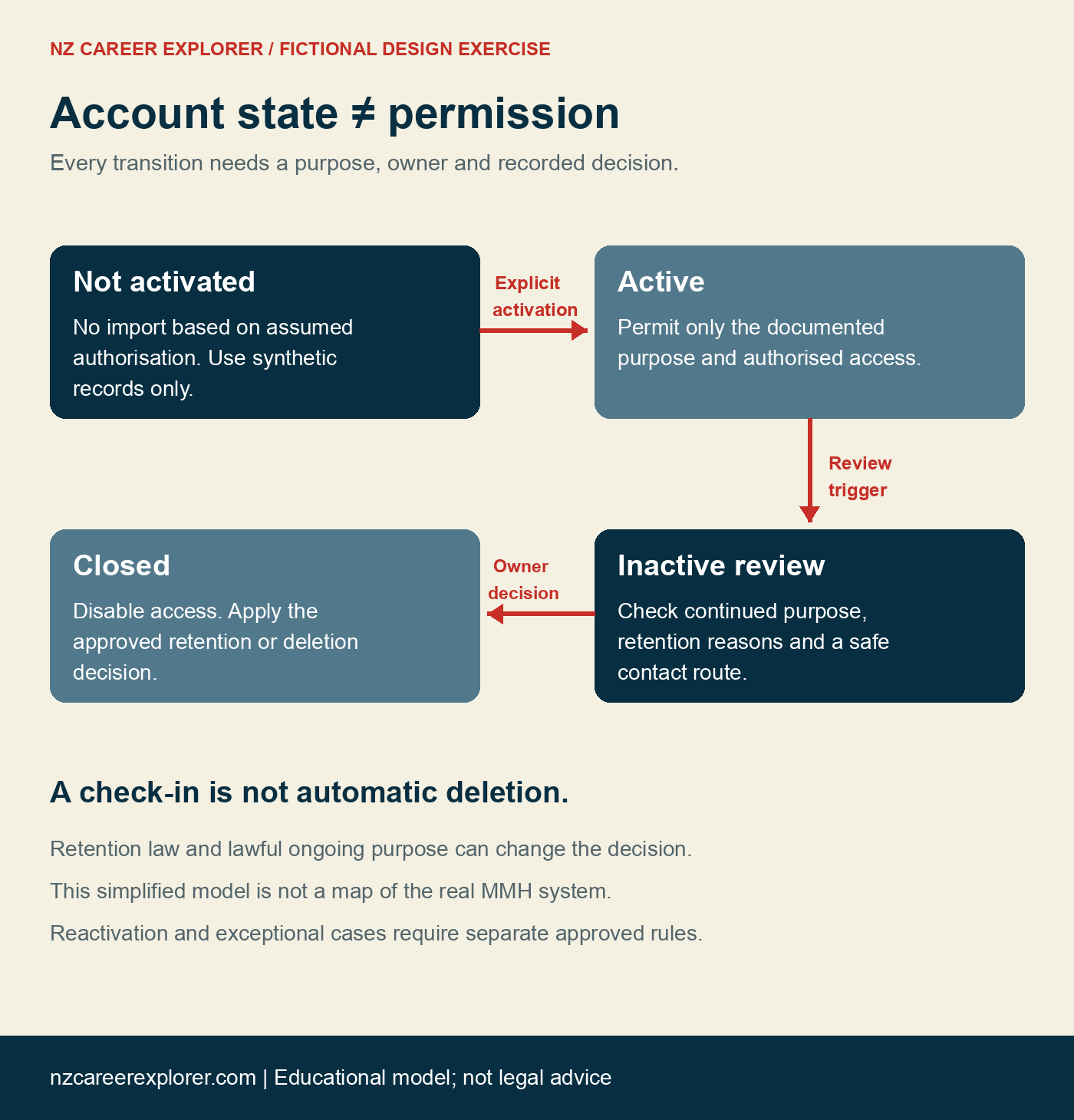
The model has four states: not activated, active, inactive review and closed. These are editorial teaching choices. They are not a claim about the real portal’s database or a complete specification for health software. Exceptional cases and reactivation require their own documented rules if you expand the exercise.
State one: not activated
Write an explicit rule for incomplete registration. Identify which minimal synthetic fields the demonstration needs and prevent any further import based on assumed authorisation. Show the wording a user would see and the evidence the decision owner would need before changing it.
Keep legal interpretation separate from the prototype’s behaviour. For example, the fictional import gate can remain closed until a documented activation event occurs. That demonstrates a requirement you chose for the exercise; it does not prove that activation alone is a sufficient legal basis for every future collection.
State two: active
List permitted purposes and roles. A useful work sample shows why a proposed field belongs in the service and which role can view it. Adding a field “because it might be useful later” should trigger a question rather than an automatic import.
Personalized Career Consulting
Unlock your potential with expert career advice tailored to your goals. Get personalized guidance and actionable steps toward your dream career in New Zealand.
Get StartedInclude an access-denial example using synthetic data. Record the expected outcome and what evidence would show it. Do not place secrets, passwords or sensitive record contents in the demonstration audit trail. A log can itself create a privacy problem when it contains unnecessary information.
State three: inactive review
Show a review task with an owner, a reason and a safe contact route. Include one fictional retention exception so the model cannot blindly delete every inactive record. Make the exception’s authority and scope visible to the reviewer rather than burying them in code.
The regulator’s general check-in expectation is useful context here, but the actual exercise requirement must state its assumptions. If those assumptions change, revise the requirement and the test case together. A diagram with a twelve-month label does not resolve an organisation’s legal obligations.
State four: closed
Demonstrate that an old session cannot continue to access the fictional account. Separately, show how an authorised retention or deletion decision would be recorded. Include the decision owner, date, scope and reason so another reviewer can follow the outcome.
Use a simulation for disposal behaviour. There is no need to delete real information or connect to a production database. If you later adapt the work for an employer, obtain the appropriate review and authorisation before changing any real system or record.
Plan twelve synthetic cases without inventing results
The downloadable plan allocates three cases to each state. It covers import or purpose checks, access and lifecycle decisions, plus communication or traceability questions. Three per state is a teaching allocation, not a statistically representative sample or a completeness claim.
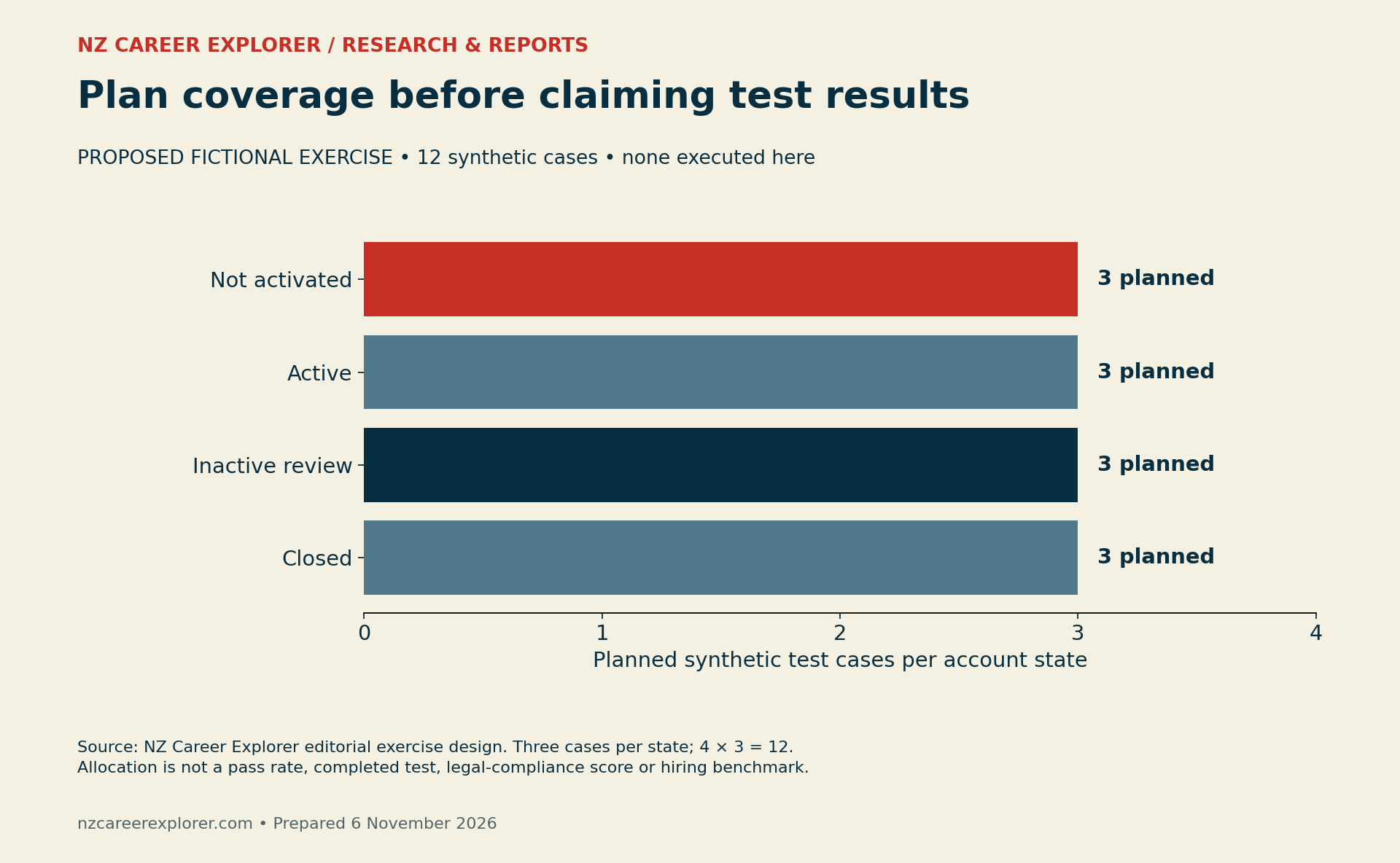
Before implementing a case, write its precondition, proposed action and expected result. Then link it to a documented requirement. If the requirement is unclear, mark the case unresolved rather than choosing a convenient expected outcome after seeing what the prototype does.
When you run your own version, record actual results separately. A failed case can be useful evidence if you explain the correction and retain the original result. Do not describe our template as “twelve successful tests”: it contains no executed outcomes.
| Portfolio item | Useful evidence | Claim to avoid |
|---|---|---|
| Lifecycle model | Named states, triggers and decision owners | A complete map of MMH’s system |
| Purpose register | Field-level purpose and unresolved legal questions | Every retained field is automatically lawful |
| Test plan | Requirement links and blank result fields | Tests were run or passed here |
| Communication plan | Confirmed facts, unknowns and review routes | A ready-to-send real breach notice |
Explain communication and community considerations
The communication template asks who knows the facts, who owns the contact route and which statements remain uncertain. Write a fictional scenario that separates a confirmed fact from an unresolved question. Include a correction route if the first message turns out to be incomplete.
Consider accessibility and cultural input as part of planning. The inquiry highlights Northland community impacts and Māori perspectives. A solo portfolio cannot claim community consultation that never happened. Instead, identify where appropriate engagement and Māori data-governance input would be needed before a real service decision.
For a representative request, record the need to establish authority and route the matter to the right decision owner. Do not invent a universal access entitlement or copy a real family’s situation. The sample row is a question for approved requirements and legal review, not operational advice.
Present the work as evidence of reasoning
Your project notes can explain the source, scope, assumptions, diagrams and unresolved questions. Keep the difference between the regulator’s findings and your own design choices visible. Include version dates so a reviewer can tell which public guidance you used.
For relevant newcomers, local context can help explain terminology and institutions. However, a portfolio project is not a qualification, occupational registration, visa pathway or proof of New Zealand work experience. Compare it with actual role requirements before paying for additional training.
Our employer-shortlist research provides a way to record those requirements. If you are reviewing an extended search, the application-review guide keeps pending outcomes separate from confirmed decisions. Neither tool promises that a particular portfolio will secure an interview.
Transform Your Career with a Professional CV and Cover Letter
Stand out to employers with an ATS-optimized resume and tailored cover letter designed to match your dream role. Let us craft your job application materials for success!
Get StartedDownload the public-source context and fictional tools
The source-context CSV records the separately attributed percentages, inquiry dates and qualified check-in expectation. The remaining files are blank or proposed educational tools. Their example identifiers and scenarios are synthetic, and their result fields do not represent completed testing.
Download the inquiry source-context table (CSV)
Get the twelve-case synthetic test plan (CSV)
Open the blank data-purpose register (CSV)
Use the fictional communication-planning template (CSV)
Keep a completed work sample free of real personal information. If you publish your own demonstration, check all screenshots, filenames and logs as well as the visible page. Hidden sample data and copied error messages can reveal information even when the main diagram looks harmless.
Methodology and limitations
We checked the regulator’s inquiry hub, 30 October media release, executive summary and final phase-two PDF on 6 November 2026. The PDF cover date is 27 October; publication of the public material is 30 October. The chart retains the 90% and around-91% statements separately rather than creating a new precise estimate.
The four-state model, twelve-case allocation and worksheets are our proposed educational framework. We have not implemented a portal, executed the tests, audited a service or measured employer demand.
This is a learning project, not legal advice or a compliance certification. Real obligations depend on the relevant facts and law. Seek appropriately qualified advice before applying a retention, collection, access or notification rule to a real organisation.
Suggested citation: NZ Career Explorer, “NZ Privacy Portfolio Project: Lessons From the Manage My Health Inquiry,” prepared 6 November 2026, drawing on the Office of the Privacy Commissioner’s final phase-two material. Cite the regulator for its findings and this article for the fictional exercise design.


