




Overview of the Beekeeping Profession in New Zealand
Beekeeping plays a vital role in New Zealand’s agricultural landscape.
The profession supports both honey production and essential crop pollination.
Experienced beekeepers manage thousands of hives across diverse regions.
Essence of Beekeeping in New Zealand
Moreover, their work helps sustain native ecosystems and biodiversity.
Beekeepers monitor hive health to prevent diseases and pests.
They also ensure colonies have sufficient nutrition throughout the seasons.
Key Responsibilities of Beekeepers
Furthermore, beekeepers relocate hives to align with pollination demands.
This practice supports fruit growers and vegetable farmers nationwide.
Operations can vary from small family-run apiaries to large commercial enterprises.
Types of Beekeeping Operations
For example, Meadowbrook Apiaries in Canterbury manages over 1,200 hives.
Alternatively, Green Valley Honey operates regionally with sustainable practices.
Both emphasize hive health while contributing to pollination services.
Training and Industry Support
New Zealand offers specialized training programs for aspiring beekeepers.
Organizations like Apiculture New Zealand provide resources and advocacy.
These bodies also promote best practices and industry innovations.
Personalized Career Consulting
Unlock your potential with expert career advice tailored to your goals. Get personalized guidance and actionable steps toward your dream career in New Zealand.
Get StartedConsequently, beekeepers stay updated on techniques and regulatory changes.
Challenges Faced by Beekeepers
Beekeepers confront challenges such as varroa mite infestations and climate variability.
Additionally, maintaining hive productivity requires constant vigilance.
However, collaboration within the industry helps overcome many obstacles.
Thus, beekeepers continue to support New Zealand’s pollination industry effectively.
Importance of Beekeepers in Maintaining Healthy Bee Populations
Beekeepers maintain healthy bee populations through attentive care.
They address disease, pests, and other threats to colonies.
Their work supports plant pollination and ecosystem stability.
Role of Beekeepers in Colony Health
Beekeepers actively manage bee colonies to prevent diseases and pests.
They monitor hives regularly to detect early signs of problems.
Furthermore, beekeepers apply treatments to control mites and infections.
Through careful management, they ensure colonies remain strong and productive.
Supporting Biodiversity Through Bee Care
Beekeepers contribute to biodiversity by maintaining diverse bee strains.
They selectively breed bees with traits suited to New Zealand’s environment.
Transform Your Career with a Professional CV and Cover Letter
Stand out to employers with an ATS-optimized resume and tailored cover letter designed to match your dream role. Let us craft your job application materials for success!
Get StartedThis practice enhances resilience against environmental changes and diseases.
Consequently, healthy bee populations support various native and agricultural plants.
Promoting Sustainable Pollination Services
Beekeepers collaborate with farmers to provide effective pollination services.
They transport hives to orchards and crops during critical flowering periods.
This maximizes crop yields and promotes consistent fruit production.
Additionally, beekeepers educate growers on how to protect pollinators.
Community Engagement and Education
Many beekeepers engage local communities to raise awareness about bees.
They host workshops to teach safe and sustainable beekeeping practices.
This outreach fosters greater understanding of bees’ environmental importance.
As a result, public support for pollinator health continues to grow nationwide.
Role of Beekeepers in Commercial Pollination Services
Beekeepers provide services for commercial pollination contracts.
They prepare and manage hives to meet growers’ pollination needs.
Also, they coordinate placement, transport, monitoring, and sustainability practices.
Providing Healthy Bee Colonies
Beekeepers like Liam Trew ensure the health of their bee colonies before pollination contracts.
Boost Your Career with a Standout LinkedIn Profile
Attract recruiters and expand your network with a fully optimized LinkedIn profile tailored to highlight your strengths and professional goals. Let your profile open doors to new opportunities!
Get OptimizedThey regularly inspect hives to prevent diseases and pests from spreading.
Moreover, they maintain strong colonies to maximize pollination efficiency.
Healthy bees directly support better crop yields through effective pollination.
In addition, beekeepers feed bees with supplements to boost their vitality.
Coordinating with Growers and Farmers
Beekeepers collaborate closely with orchard managers such as Willowton Orchards.
They schedule hive placement according to flowering periods for optimal results.
Timely coordination ensures bees are present when plants need pollination the most.
Furthermore, they communicate about crop types to adjust hive management accordingly.
This partnership benefits both growers and beekeepers by increasing fruit quality and production.
Transporting and Positioning Hives
Beekeepers like Samantha Cole employ careful transportation techniques for hive relocation.
They use ventilated trucks to reduce stress during transport.
Once onsite, hives are positioned strategically within crop blocks.
This placement maximizes bee access to blossoms efficiently.
Proper hive setup also helps protect bees from harsh weather conditions and predators.
Monitoring Pollination Effectiveness
Beekeepers conduct regular hive assessments during the pollination period.
They track bee activity to ensure active foraging on target crops.
When necessary, hive numbers are adjusted to meet crop pollination demands.
Data gathered helps improve future pollination strategies and services.
Additionally, beekeepers work with agronomists to refine techniques based on observations.
Supporting Biodiversity and Sustainability
Beekeepers promote pollinator-friendly practices alongside commercial pollination.
They encourage planting wildflowers near orchards to sustain bee populations.
Also, they minimize pesticide exposure through coordinated use with farmers.
This approach protects native insects and supports environmental health.
Ultimately, beekeepers contribute to a sustainable agricultural ecosystem in New Zealand.
Find Out More: Agri-Business Consultants: Growing Careers in NZ’s Farm Innovation
Techniques Used by Beekeepers to Support Crop Pollination
Beekeepers inspect hives regularly to maintain healthy and active colonies.
They remove pests and diseases promptly to prevent colony decline.
Furthermore, beekeepers time hive placement to coincide with crop flowering.
Hive Management for Optimal Pollination
Furthermore, beekeepers relocate hives to match crop flowering schedules.
Also, managers regulate colony size to balance pollination and hive health.
Selection of Bee Species and Strains
Beekeepers select strains with strong foraging behavior to improve crop visitation.
Some choose hygienic bees to reduce disease spread within colonies.
Consequently, these choices support colony survival and steady pollination service.
Transporting and Placing Hives Effectively
Beekeepers transport hives using specialized trucks to move colonies safely.
They place hives within or near target crops for efficient bee access.
Moreover, hive placement considers sun exposure and shelter from wind.
These choices support optimal bee activity and frequent crop visitation.
Monitoring and Adjusting Pollination Services
Beekeepers track weather and bloom cycles to time hive deployment.
They communicate with farmers to align hive movements with crop needs.
Regular monitoring helps maintain hive strength throughout pollination periods.
As a result, this collaboration maximizes crop yield and quality.
Supporting Bee Nutrition and Health
Beekeepers provide supplementary feed when natural forage is scarce.
This practice ensures bees remain strong during critical pollination times.
Also, beekeepers apply natural treatments to control varroa mites.
Healthy bees deliver better pollination services and support long term sustainability.
Explore Further: How Irrigation Specialists Improve NZ’s Water Management in Agriculture
Challenges Faced by Beekeepers in the NZ Pollination Industry
Beekeepers in New Zealand face unpredictable weather patterns each season.
They must adapt strategies to protect colony health.
Hive management and transport logistics become more complex as a result.
Environmental and Climatic Challenges
Sudden rainfall or droughts significantly affect bee activity and crop pollination.
Climate change has altered flowering times, disrupting bee foraging schedules.
Consequently, beekeepers must constantly adapt their strategies to protect colony health.
Pests and Diseases Impacting Hive Health
Varroa mite remains a critical threat to honeybee colonies across New Zealand.
Beekeepers like Liam Carter at HoneyFlow Apiaries devote significant effort to mite control.
Diseases such as American foulbrood require vigilant monitoring and prevention.
Logistical and Operational Constraints
Transporting hives to pollination sites often involves long distances and rough terrain.
Beekeepers like Emily Ng from Southern Bee Services coordinate carefully to minimize stress on bees.
Fluctuating demand for pollination services complicates planning efforts.
Labor and Resource Challenges
The pollination industry demands skilled labor familiar with bee management and crop needs.
However, New Zealand’s beekeeping sector faces a shortage of experienced workers.
Costs for feed, equipment, and treatments continue to rise each year.
Regulatory and Biosecurity Requirements
Strict regulations govern hive movement to protect New Zealand’s unique ecosystems.
Pollination providers must comply with biosecurity protocols to prevent pest spread.
Beekeepers like Sarah Mitchell from Kiwi Gold Apiaries invest time to meet these standards.
Market and Economic Pressures
Fluctuating crop prices directly impact the demand for pollination services.
Beekeepers often negotiate contracts with orchardists such as GreenValley Orchards.
Some growers seek lower fees, affecting beekeepers’ revenue streams.
Gain More Insights: Why Agricultural Technicians Are Vital to NZ’s Farming Innovation
Impact of Environmental Factors on Beekeeping and Pollination
Environmental factors affect both beekeeping and pollination services.
These factors include climate, habitat changes, and chemical exposure.
They influence hive productivity, bee health, and pollination timing.
Climate Variability and Weather Patterns
Climate variability significantly influences beekeeping activities across New Zealand.
Unpredictable weather affects bee foraging behavior and hive productivity.
For example, prolonged rain reduces foraging days for honeybees.
Habitat Loss and Floral Resource Availability
Habitat loss reduces native floral resources crucial for bee nutrition.
Urbanization and deforestation fragment pollination corridors for bees.
As a result, bees rely heavily on managed floral sources from crop farms.
Pesticide Exposure and Chemical Risks
Pesticides present a significant challenge to bee colony survival and health.
Neonicotinoids and other chemicals disrupt bee navigation and reproduction.
Farmers like Sarah Thompson collaborate with beekeepers to minimize spraying during bloom.
Adaptation Strategies for Beekeepers
Beekeepers develop adaptive strategies to counter environmental challenges.
These include hive relocation and introduction of resilient bee breeds.
They also monitor climate data to optimize hive health and timing.
Learn More: How Forestry Managers Sustain NZ’s Woodlands for Future Generations
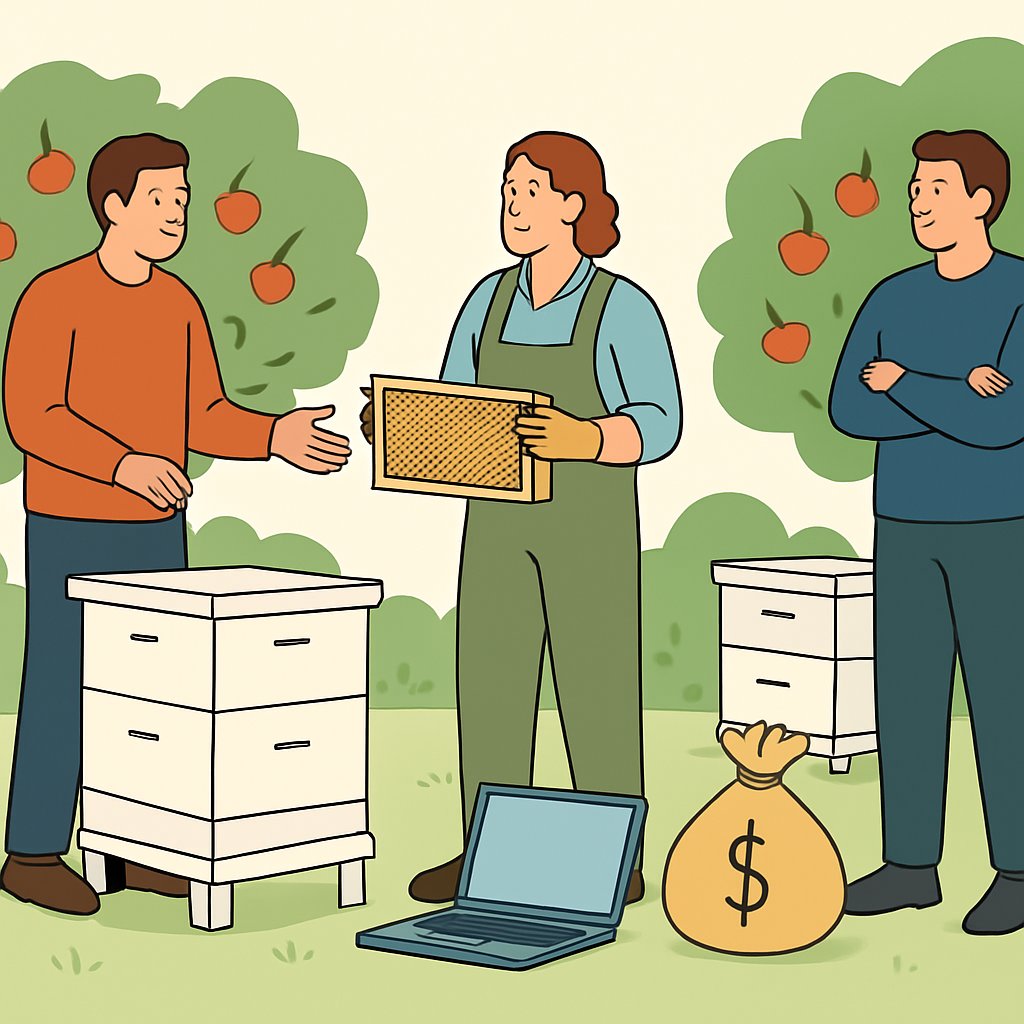
Collaboration Between Beekeepers and Farmers for Optimal Crop Yields
Beekeepers and farmers work together to improve crop yields.
They plan pollination schedules to match crop flowering periods.
Additionally, their cooperation reduces risks to both crops and bee colonies.
Building Strong Partnerships
Beekeepers and farmers establish close relationships to enhance crop productivity.
They communicate frequently to coordinate schedules and field needs.
For example, farmer Liam Henderson coordinates with beekeeper Emily Carter before planting.
Such collaboration ensures hives are available at critical pollination times.
Moreover, cooperative planning reduces risks to both crops and bees.
Timing Pollination for Maximum Benefit
Farmers share crop flowering timelines with beekeepers well in advance.
Consequently, beekeepers like Nathan Reed position hives strategically on farms.
This timing enables bees to pollinate when flowers are most receptive.
As a result, fruit set and yield quality improve significantly.
Additionally, farms benefit from healthy pollinator activity through the season.
Sharing Knowledge and Resources
Beekeepers provide farmers with insights on bee health and behavior.
Farmers in turn educate beekeepers about crop management and pest control.
Such information exchange helps avoid harmful pesticide use during pollination.
For instance, Greenfield Orchards and Buzz & Bloom Apiaries hold training sessions.
This cooperation protects bees and supports sustainable farming practices.
Economic Advantages of Collaboration
Joint efforts between farmers and beekeepers lead to higher crop yields.
Better yields translate to increased income for both parties.
Furthermore, dependable pollination reduces potential losses from poor fruit development.
Farmers like Sarah Thompson value reliable hive placement guarantees.
Likewise, beekeepers gain stable revenue through ongoing pollination contracts.
Community and Environmental Impact
Collaborative approaches promote environmental stewardship in rural areas.
Together, farmers and beekeepers support biodiversity and healthy ecosystems.
This partnership encourages habitat conservation for native pollinators as well.
In addition, integrated efforts raise community awareness about pollination importance.
Ultimately, collaboration contributes to agricultural sustainability in New Zealand.
Regulatory Frameworks Affecting Beekeepers
New Zealand’s government sets strict regulations for the beekeeping industry.
The Biosecurity Act governs how beekeepers must manage their hives and bees.
In addition, the Apiaries Act requires adherence to specific standards for hive management.
National Regulations and Compliance
Beekeepers must register their apiaries with the Ministry for Primary Industries (MPI).
Registration helps monitor bee health and limits the spread of pests and diseases.
Therefore, beekeepers like Liam Rutherford from Wellington adhere strictly to these legislative requirements.
Local Authority Requirements
Regional councils design additional rules tailored to local environmental conditions.
For example, Auckland Council mandates specific hive placement rules to protect native flora.
Local bylaws promote collaboration between beekeepers and farmers to optimize pollination services.
Biosecurity Measures Supporting Hive Health
The Varroa mite remains the foremost threat to New Zealand’s honey bees.
MPI enforces rigorous surveillance and treatment protocols to keep infestations under control.
Additionally, effective hygiene and quarantine rules prevent the spread of other pests like small hive beetles.
Pest and Disease Control
Beekeepers must routinely inspect and treat hives using approved methods.
Companies such as BlueStream Apiaries employ biosecurity officers to train staff on these protocols.
These rules ensure sustainable beekeeping practices that do not conflict with urban or agricultural needs.
Import Controls and Quarantine
New Zealand strictly controls the importation of bees and related products.
Such controls prevent introducing exotic diseases and unwanted pests into the country.
Imported queens and package bees undergo mandatory quarantine before release.
Communication and Reporting Obligations
MPI encourages open communication between beekeepers and biosecurity officials.
Beekeepers must promptly report unusual symptoms or suspected pest sightings.
Such early reporting aids rapid response and containment efforts.
Economic Contributions of Beekeeping to New Zealand’s Agriculture
Beekeepers play a crucial role in improving agricultural productivity across New Zealand.
They provide essential pollination services to various fruit, vegetable, and seed crops.
Beekeeping generates substantial revenue through production of honey and other hive products.
Enhancing Crop Yields Through Pollination
Consequently, these crops achieve higher yields and better quality thanks to effective pollination.
For example, orchards growing kiwifruit and apples depend heavily on managed honeybee colonies.
Moreover, crops such as avocados and berries benefit significantly from targeted pollination efforts.
Supporting the Honey and Hive Product Industry
Farms like Taranaki Apiaries and Canterbury Honeyworks illustrate successful local enterprises.
In addition to honey, beekeepers harvest beeswax, propolis, and royal jelly for commercial use.
These products contribute to value addition and create employment opportunities nationwide.
Furthermore, many New Zealand brands export high-quality honey internationally, boosting trade.
Strengthening Rural Economies and Communities
Beekeeping stimulates rural economies by providing income for small-scale farmers and entrepreneurs.
Around Otago and Waikato, local beekeepers like Emma Fraser support sustainable livelihoods.
Importantly, beekeeping encourages diversification in farming practices, enhancing financial resilience.
Additionally, hive rental services create symbiotic partnerships between beekeepers and crop growers.
These partnerships ensure mutual benefits and long-term sustainability of regional agriculture.
Driving Innovation and Research in Agricultural Pollination
New Zealand beekeepers actively collaborate with scientists to improve pollination techniques.
Institutes such as the National Institute of Water and Atmospheric Research fund research projects.
These initiatives advance hive health, bee nutrition, and effective pollination strategies.
Consequently, ongoing innovation helps maintain competitiveness and environmental sustainability.
Therefore, beekeepers significantly influence the future development of New Zealand’s agriculture.
Future Trends and Innovations in Beekeeping to Enhance Pollination
This section highlights emerging technologies and practices that improve pollination services.
Leaders and researchers implement new tools to strengthen hive performance and pollination outcomes.
Below, specific innovations illustrate practical changes in apiary management and coordination.
Technological Advances Transforming Beekeeping
Beekeepers in New Zealand increasingly adopt smart hive technology to monitor colony health.
These devices measure temperature, humidity, and hive activity continuously.
Beekeepers like Liam Hawkins use data to detect early signs of disease.
Also, GPS tracking helps manage hive locations more efficiently across pollination sites.
Sustainable Practices for Healthier Bees
Sustainable beekeeping methods gain momentum among industry leaders such as Willow Creek Apiaries.
They apply organic treatments and minimize chemical use within hives.
Additionally, integrating native flowering plants supports bee nutrition and biodiversity.
As a result, colonies show improved resilience to environmental stressors.
Innovations in Breeding and Genetics
New genetic research improves the resilience of honeybee populations.
Researchers at the New Zealand Institute of Pollination study traits such as disease resistance.
Consequently, beekeepers like Rachel Tremblay breed stronger bees adapted to local conditions.
Therefore, this work reduces dependence on chemical interventions and supports colony survival.
Automation and Robotics Supporting Beekeepers
Robotic systems assist with hive inspections and reduce manual labor for beekeepers.
For example, ApiTech Robotics develops drones to monitor large apiaries efficiently.
Additionally, automated feeders provide proper nutrition during off flowering periods.
Consequently, these technologies increase productivity and improve hive management.
Data Analytics Driving Better Decision-Making
Advanced analytics help beekeepers make informed decisions about hive health and pollination timing.
For instance, Pollination Manager software from Kiwi Bee Solutions integrates weather and bloom data.
As a result, operators such as Tobias Reid plan hive movements with greater precision.
Therefore, pollination services grow more effective and reliable for farmers.
Collaborative Approaches to Enhance Pollination
Beekeepers collaborate closely with farmers and researchers to optimize pollination outcomes.
For example, The NZ Pollination Collective encourages shared knowledge and pooled resources.
Additionally, community programs support habitat restoration for wild and managed bees.
Consequently, partnerships strengthen pollination systems across the nation.