




The Role of Professional Development Trainers in Enhancing Employee Skills
Identifying Skill Gaps and Training Needs
Professional development trainers analyze business operations to identify employee skill gaps.
They collaborate with managers like Olivia Turner from Hamilton Technologies to understand team needs.
Consequently, they tailor training programs that address specific weaknesses and leverage strengths.
This targeted approach improves overall workforce capability and boosts employee confidence.
Designing Customized Training Programs
Trainers such as Daniel Reid design programs unique to each company’s culture and goals.
Moreover, they incorporate relevant case studies and real-world examples specific to New Zealand industries.
They use diverse methods including workshops, e-learning, and hands-on exercises for engagement.
As a result, employees at Rangitira Consulting experience practical skill enhancement.
Facilitating Continuous Skill Development
Professional trainers emphasize ongoing learning beyond initial workshops or sessions.
They encourage employees to practice new skills regularly to reinforce knowledge retention.
Furthermore, trainers like Leah McIntosh offer follow-up coaching to address challenges as they arise.
This continuous support fosters sustained employee growth and adaptability in dynamic markets.
Boosting Employee Motivation and Engagement
Skilled trainers employ interactive techniques that inspire active participation and enthusiasm.
For instance, Benjamin Clark from Taranaki Growth uses gamification to make training enjoyable.
Consequently, employees remain motivated to improve and apply new competencies at work.
Personalized Career Consulting
Unlock your potential with expert career advice tailored to your goals. Get personalized guidance and actionable steps toward your dream career in New Zealand.
Get StartedThis energy contributes to enhanced productivity and positive workplace morale.
Aligning Employee Skills with Business Objectives
Professional development trainers ensure training outcomes align with company strategic goals.
They work closely with executives like Maria Evans at Wellington Solutions to set measurable targets.
Additionally, trainers track progress and adjust programs to meet evolving business demands.
Therefore, skill enhancement directly supports organizational growth and competitiveness.
How Tailored Training Programs Address Specific Business Needs in NZ
Identifying Unique Business Challenges
Professional development trainers first analyze the unique challenges faced by each company.
For instance, Hamilton Engineering identified gaps in technical skills among its staff.
Therefore, trainers conducted a detailed skills audit to understand these shortcomings.
Likewise, Wellington Marketing sought help to improve collaboration across teams.
Thus, trainers customized programs to target communication and teamwork issues specifically.
Developing Customised Learning Solutions
Trainers design learning modules that focus on the client’s precise operational needs.
Davina Scott, a lead trainer at Kiwi Growth Solutions, emphasizes tailoring content to business context.
Consequently, employees engage more actively when training mirrors their daily tasks.
This relevance boosts knowledge retention and practical application significantly.
Transform Your Career with a Professional CV and Cover Letter
Stand out to employers with an ATS-optimized resume and tailored cover letter designed to match your dream role. Let us craft your job application materials for success!
Get StartedFor example, South Island Shipping focused their training on safety protocols pertinent to their vessels.
Enhancing Employee Skills for Business Growth
Tailored programs improve employee competencies aligned with company objectives.
Consequently, local businesses like Nelson Tech Services experience measurable productivity increases.
Moreover, these programs foster leadership qualities relevant to New Zealand’s work culture.
Trainers like James McAllister develop modules incorporating local regulations and standards.
Hence, businesses comply better while optimizing their operational efficiency.
Adapting Training to Industry Trends and Regulations
Professional development trainers stay updated with New Zealand’s evolving industry standards.
They ensure the training content reflects current health and safety laws as an example.
Additionally, they incorporate emerging technology skills to keep businesses competitive.
Sectors like agriculture benefit from this with tailored training on sustainable practices.
Thus, companies remain compliant and future-ready simultaneously.
Collaborative Development and Continuous Improvement
Trainers work closely with company leaders to refine training programs continuously.
Feedback from participants like those at Auckland Software firms informs iterative improvements.
This collaboration ensures the training adapts to emerging business priorities effectively.
Boost Your Career with a Standout LinkedIn Profile
Attract recruiters and expand your network with a fully optimized LinkedIn profile tailored to highlight your strengths and professional goals. Let your profile open doors to new opportunities!
Get OptimizedAs a result, companies attain ongoing positive outcomes from their investment in training.
Ultimately, tailored training fosters a resilient and skilled workforce across New Zealand.
Impact of Continuous Learning on Employee Motivation and Retention
Enhancing Employee Motivation Through Continuous Learning
Continuous learning inspires employees to grow their skills regularly.
When staff develop professionally, their confidence increases noticeably.
Ongoing training fosters a culture of innovation and engagement.
Therefore, employees feel valued and motivated to contribute actively.
This motivation often leads to higher productivity across departments.
Strengthening Retention by Investing in Employee Growth
Employees stay longer when they see clear development opportunities.
Companies like PacificTech Solutions have reported reduced turnover due to training.
Retention improves because staff feel their careers are supported.
Consequently, companies save costs related to recruiting and onboarding.
Longer tenure also builds stronger team dynamics and knowledge retention.
Benefits of Professional Development Programs
Professional development tailors learning to specific employee needs.
Innovative programs, like those offered by Lumina Learning, boost morale.
Additionally, skill upgrades help staff handle evolving business challenges.
Trainers encourage collaboration, increasing peer learning and support.
Such investments create a positive work environment that attracts talent.
Strategies to Maximise Learning Impact
Effective trainers personalise content to match employee roles and goals.
Also, regular feedback sessions help track progress and adjust plans.
Blended learning formats combine online modules and face-to-face workshops.
Furthermore, recognition programs celebrate learning achievements company-wide.
These strategies ensure continuous learning translates into sustained motivation.
See Related Content: How Adult Education Is Transforming Career Opportunities in NZ
Strategies Used by Trainers to Foster Leadership and Management Capabilities
Building Core Leadership Skills
Effective trainers focus on enhancing communication abilities in emerging leaders.
They encourage active listening and clear articulation of ideas.
Moreover, trainers develop decision-making skills through practical exercises.
This approach helps managers handle complex scenarios confidently.
Additionally, trainers cultivate emotional intelligence to improve workplace relationships.
Creating Engaging and Practical Learning Experiences
Trainers use real-life case studies to connect theory with practice.
These scenarios challenge participants to think critically and adapt quickly.
Interactive workshops allow managers to apply new skills immediately.
Furthermore, role-playing activities simulate leadership challenges realistically.
Such methods increase retention and inspire continuous learning.
Promoting Strategic Thinking and Vision
Professional development sessions emphasize long-term planning techniques.
Trainers guide leaders to align team goals with company vision.
They facilitate brainstorming to encourage innovative problem-solving.
Workshops also address risk management and opportunity assessment.
This prepares managers to anticipate market changes effectively.
Encouraging Collaborative Leadership Styles
Trainers highlight the importance of teamwork and shared decision-making.
They foster environments where diverse ideas are valued and explored.
Leaders learn to empower employees and delegate tasks efficiently.
This strategy enhances motivation and drives collective success.
Additionally, it builds trust within and across teams.
Supporting Continuous Feedback and Improvement
Effective trainers implement regular feedback mechanisms during training.
They teach leaders to accept and provide constructive feedback graciously.
Continuous evaluation helps identify growth areas quickly.
Moreover, trainers encourage setting measurable performance goals.
This cycle ensures ongoing personal and professional development.
Uncover the Details: How Technology Is Changing the Role of Teachers in NZ Schools
Enhancing Adaptability and Innovation Through Upskilling Initiatives
Building Workforce Agility
Professional development trainers empower employees to adapt quickly to market changes.
They create tailored training programs that target specific industry needs.
For instance, Emma Robertson from SilverPeak Consulting designs workshops focused on emerging technologies.
As a result, teams become more flexible and responsive to evolving business demands.
Driving Innovation Through Continuous Learning
Continuous learning fosters a culture of innovation within organisations.
Training sessions led by experts like Liam Walker inspire creative problem-solving skills.
Moreover, these initiatives help uncover new opportunities for product and process improvements.
Consequently, businesses like KiwiTech Solutions gain a competitive edge in the New Zealand market.
Encouraging Collaborative Growth
Upskilling initiatives encourage collaboration among diverse teams.
Trainers facilitate workshops that promote knowledge sharing and teamwork.
For example, Rachel Tan from Horizon Development organises cross-departmental learning activities.
Therefore, companies enhance communication and collective innovation capacity.
Addressing Skill Gaps Proactively
Professional trainers assess skill gaps through comprehensive audits and feedback.
They develop targeted programs to upgrade employee competencies effectively.
Steve Marshall of Apex Training works closely with SMEs to align skills with business goals.
Hence, organisations reduce talent shortages and boost overall performance.
Implementing Technology-Driven Training
Modern upskilling includes incorporating digital tools and e-learning platforms.
Trainers like Nadia Patel integrate virtual workshops and interactive modules.
This approach increases accessibility and engagement for remote or distributed teams.
Ultimately, businesses such as Wellington Data Analytics improve knowledge retention and application.
Measuring Impact and Fostering Continuous Growth
Effective upskilling programs include ongoing evaluation and refinement.
Trainers gather feedback and monitor key performance indicators regularly.
For example, Oliver Moore from Elevate Learning uses analytics to enhance training outcomes.
Consequently, companies sustain high adaptability and foster a culture of innovation.
You Might Also Like: Exploring the Path to Becoming a Curriculum Developer in NZ
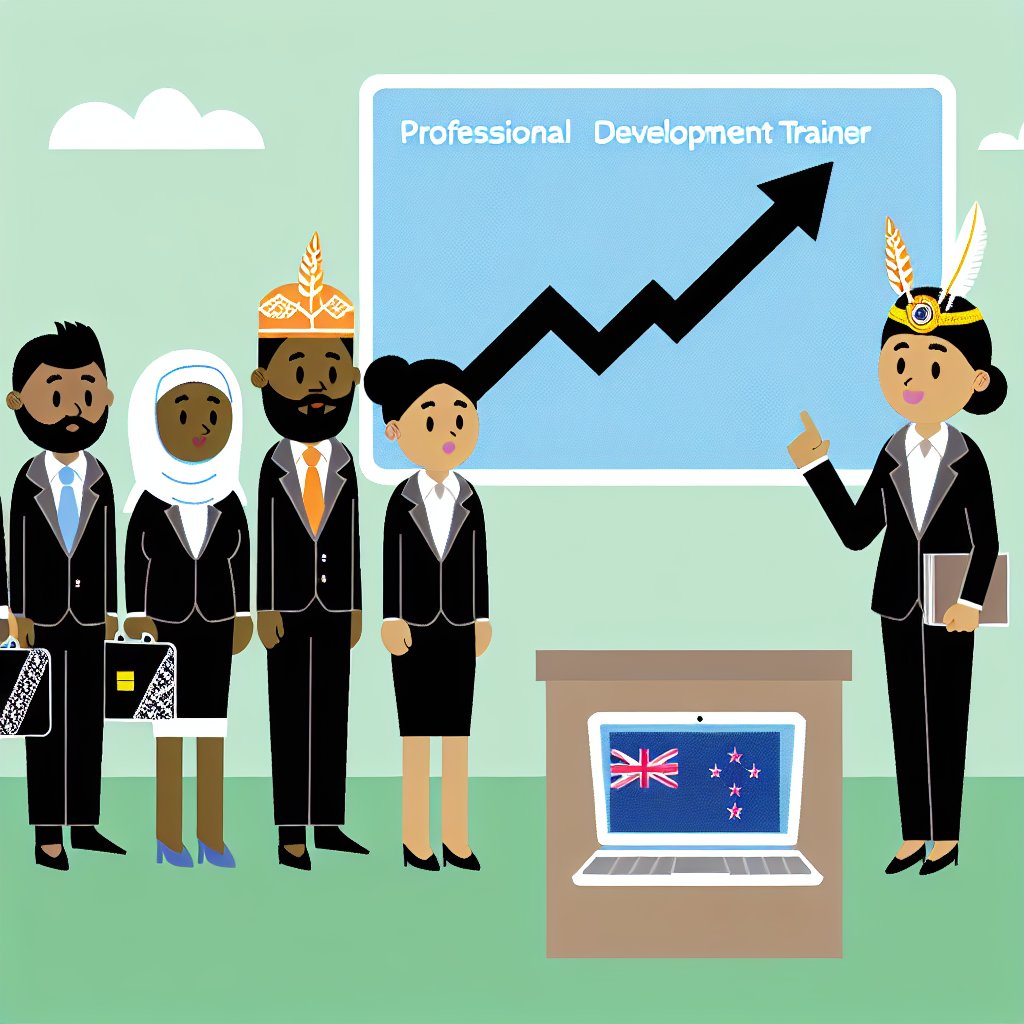
Measuring the Return on Investment (ROI) of Professional Development
Defining Clear Objectives
Measuring ROI starts with setting clear and measurable professional development goals.
Leah Thompson, a training manager at Kaitaki Solutions, emphasises clarity in learning outcomes.
Clear objectives help align training activities with business needs effectively.
Moreover, specific goals allow precise tracking of improvements and benefits over time.
Tracking Employee Performance Improvements
Companies can monitor performance metrics before and after training sessions.
For example, Wellington Digital increased sales efficiency by tracking client acquisition rates.
Additionally, feedback surveys help gauge increased confidence and skill application.
Tracking these indicators reveals tangible benefits from invested training resources.
Calculating Financial Impact
Translating improved skills into financial terms quantifies the ROI clearly.
James McAllister from Taranaki Fabrics calculates revenue growth linked to staff development.
Cost savings from reduced errors and higher productivity also contribute to ROI.
Therefore, analysing profit margins before and after training reveals financial gains.
Using Qualitative Data to Complement Numbers
Quantitative data alone cannot fully capture training’s impact.
Interviews with employees and managers add valuable qualitative insights.
For instance, feedback from Ella Ngatai at BayTech highlighted improved teamwork post-training.
Furthermore, stories of career progression demonstrate long-term training value.
Implementing Long-Term Evaluation Strategies
ROI assessment requires ongoing tracking beyond initial training completion.
Rewi Daniels from Silver Fern Logistics uses quarterly reviews to measure lasting effects.
Consistent evaluation helps identify areas for further development and adjustment.
Also, it reinforces the company’s commitment to continuous learning and growth.
Leveraging Technology for Efficient ROI Measurement
Learning management systems streamline data collection and analysis.
Victoria Adams at Horizon Healthcare uses software to track course completions and progress.
Data dashboards offer real-time insights into training impact for leadership teams.
Consequently, technology enables faster and more accurate ROI calculations.
See Related Content: The Importance of Māori Language Educators in New Zealand’s Culture
The Contribution of Trainers to Building a Positive Workplace Culture
Fostering Effective Communication
Professional development trainers like Emma Lawson guide teams to communicate clearly and respectfully.
This training reduces misunderstandings and promotes collaboration across departments.
Additionally, trainers encourage open dialogue, enabling employees to share ideas freely.
Consequently, this openness creates a foundation of trust within organizations such as KiwiTech Solutions.
Encouraging Employee Engagement and Motivation
Trainers inspire staff through interactive workshops and personalized coaching sessions.
For example, James Harper customized motivational programs for Auckland-based firm Mana Consulting.
These efforts increase job satisfaction and drive employees to perform at their best.
Moreover, engaged employees contribute positively to workplace energy and morale.
Promoting Inclusivity and Diversity
Professional trainers raise awareness about the value of diverse perspectives in the workplace.
Sophie Patel delivered successful inclusivity workshops to Wellington’s GreenWave Enterprises.
Her sessions helped teams appreciate different backgrounds and fostered respect for all employees.
As a result, companies experience stronger team cohesion and innovative thinking.
Building Resilience and Adaptability
Trainers equip staff with strategies to manage stress and adapt to change effectively.
For instance, Daniel Reynolds facilitated resilience training for Christchurch’s Oceanic Logistics.
This approach helps employees maintain productivity during challenging times.
Furthermore, adaptability nurtured by trainers prepares businesses to thrive in dynamic markets.
Implementing Recognition and Feedback Systems
Training consultants guide leaders on providing constructive feedback to boost employee growth.
Natalie Owens worked with Hamilton’s BrightPath Services to establish recognition programs.
These programs celebrate achievements and reinforce positive behaviors regularly.
Therefore, recognition leads to increased motivation and a supportive workplace environment.
Overview of Trainer Impact on Workplace Culture
- Enhancing communication skills to foster team collaboration
- Boosting employee engagement and motivation through tailored initiatives
- Advocating inclusivity, diversity, and respect among staff
- Developing resilience and adaptability for changing business landscapes
- Creating feedback and recognition systems that promote continuous improvement
Collectively, these contributions enable companies such as Silver Fern Manufacturing to build strong, positive cultures.
Ultimately, professional development trainers play a crucial role in helping New Zealand businesses thrive.
Case Studies of Successful NZ Businesses Powered by Professional Development Training
Transforming Customer Service at KiwiConnect Solutions
KiwiConnect Solutions invested in professional development to enhance their customer service standards.
The training focused on communication skills and conflict resolution techniques.
As a result, employee confidence and client satisfaction significantly increased.
Moreover, team collaboration improved, creating a more positive work environment.
This ultimately boosted repeat business and referrals for KiwiConnect Solutions.
Boosting Innovation at PureGrowth Technologies
PureGrowth Technologies used professional development to foster innovation among staff.
Workshops emphasized creative problem-solving and agile project management.
Consequently, employees generated new product ideas faster and with greater creativity.
In addition, the company shortened development cycles, bringing products to market sooner.
Therefore, PureGrowth gained a competitive edge in New Zealand’s tech industry.
Enhancing Leadership Skills at HarbourEdge Finance
HarbourEdge Finance prioritized leadership training for middle managers.
The courses covered emotional intelligence and effective team motivation techniques.
Consequently, managers led their teams with greater empathy and clarity.
This resulted in higher employee morale and productivity across departments.
Furthermore, HarbourEdge reported improved project outcomes and client retention rates.
Improving Operational Efficiency at GreenLeaf Manufacturing
GreenLeaf Manufacturing integrated professional development focusing on process optimisation.
Staff learned lean management principles and continuous improvement strategies.
Thus, operational bottlenecks were reduced and waste was minimised efficiently.
As a consequence, production output increased without compromising quality.
The company saw notable cost savings and a stronger market reputation.
Empowering Sales Teams at Summit Retail Group
Summit Retail Group enhanced sales performance through targeted professional development.
The training included advanced negotiation and customer engagement tactics.
Following the program, sales representatives exceeded their targets consistently.
Besides boosting revenue, employee job satisfaction also rose significantly.
This created a dynamic sales culture that continues to drive Summit Retail’s growth.
Common Benefits Observed Across These Businesses
- Increased employee confidence and skillsets
- Improved teamwork and communication
- Greater innovation and problem-solving capabilities
- Enhanced operational efficiency and cost savings
- Stronger client relationships and business growth
Professional development training acts as a catalyst for sustainable success in New Zealand businesses.
Additional Resources
Developing Talent | Ministry of Business, Innovation & Employment