








If you are exploring research commercialisation careers in NZ, build a small work sample that someone else can review. Use invented records to show how you trace each reported event to evidence, check its date and decide whether it needs further review.
The Tertiary Education Commission’s 13 November update confirmed the operational settings for the Commercialisation component of the Tertiary Research Excellence Fund, or TREF. TEC puts the component at 7.5% of total TREF funding, currently NZ$23.6 million annually. These funding settings explain why reporting evidence matters. For role availability and pay, consult current employer listings.
Research commercialisation careers NZ: read the four weights
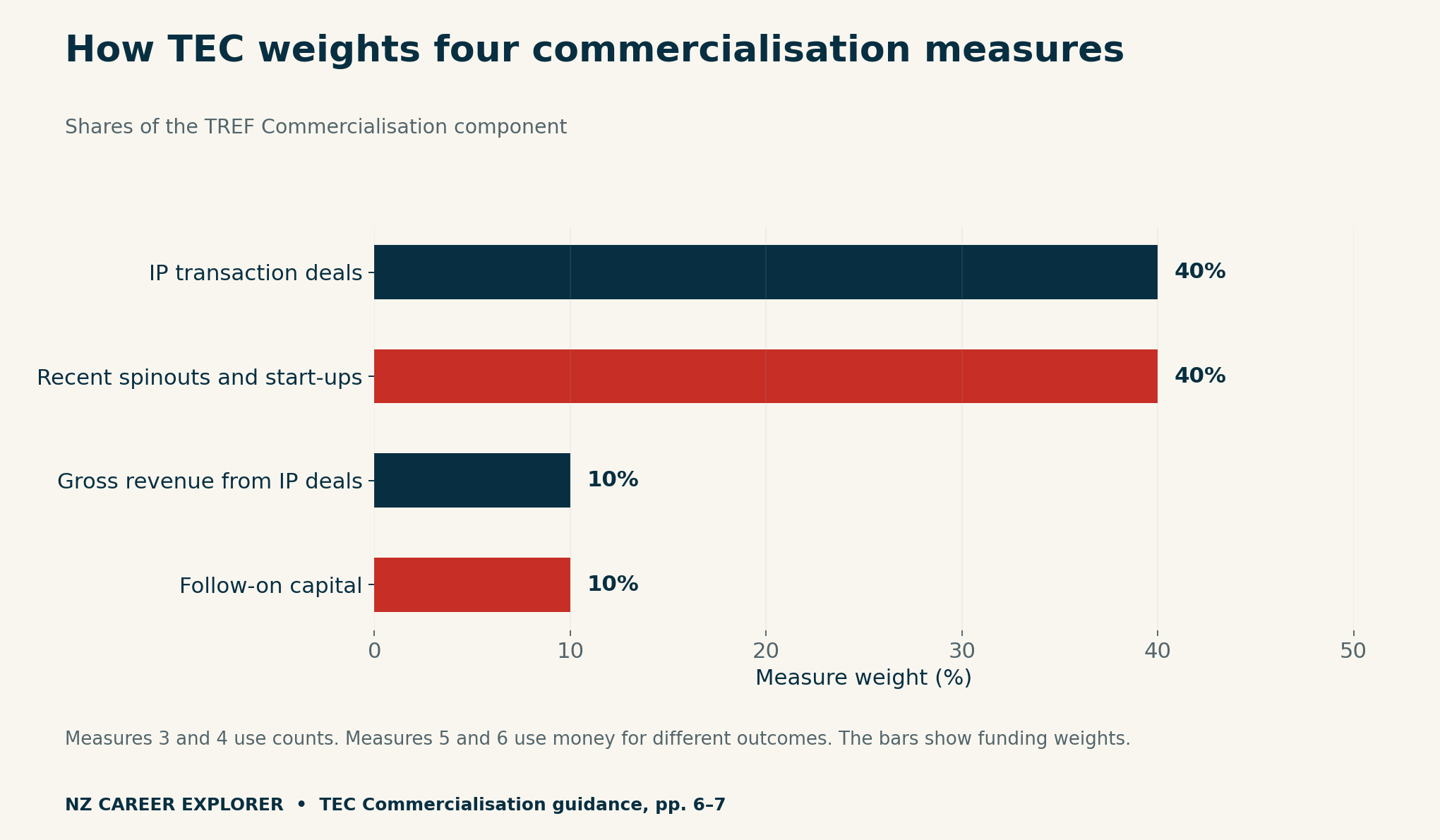
TEC’s commercialisation guidance defines eligible deals and recent companies separately. The deal measure looks back three years, while the recent spinout and start-up measure looks at the first commercialisation transaction within five years. Revenue and capital use their own definitions and reporting periods. A shared currency does not make the two financial flows interchangeable.
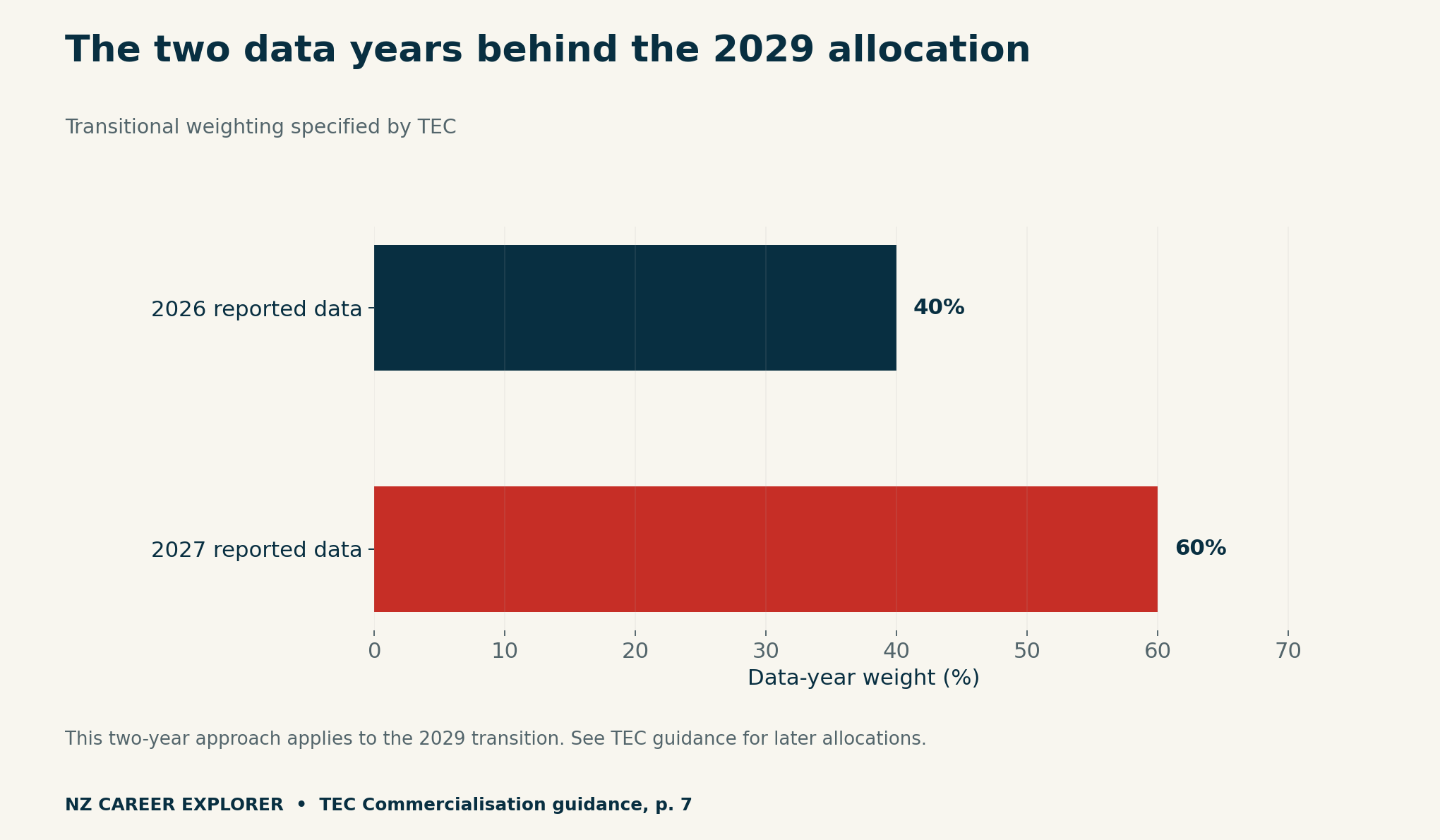
For the transitional 2029 allocation, TEC specifies 40% weighting for 2026 data and 60% for 2027 data. Keep the data year, reporting window and allocation year in separate fields. For example, a licence can have a signing date, a later date when revenue arrives and a review date when an analyst checks both documents.
Build a register with invented events and documents
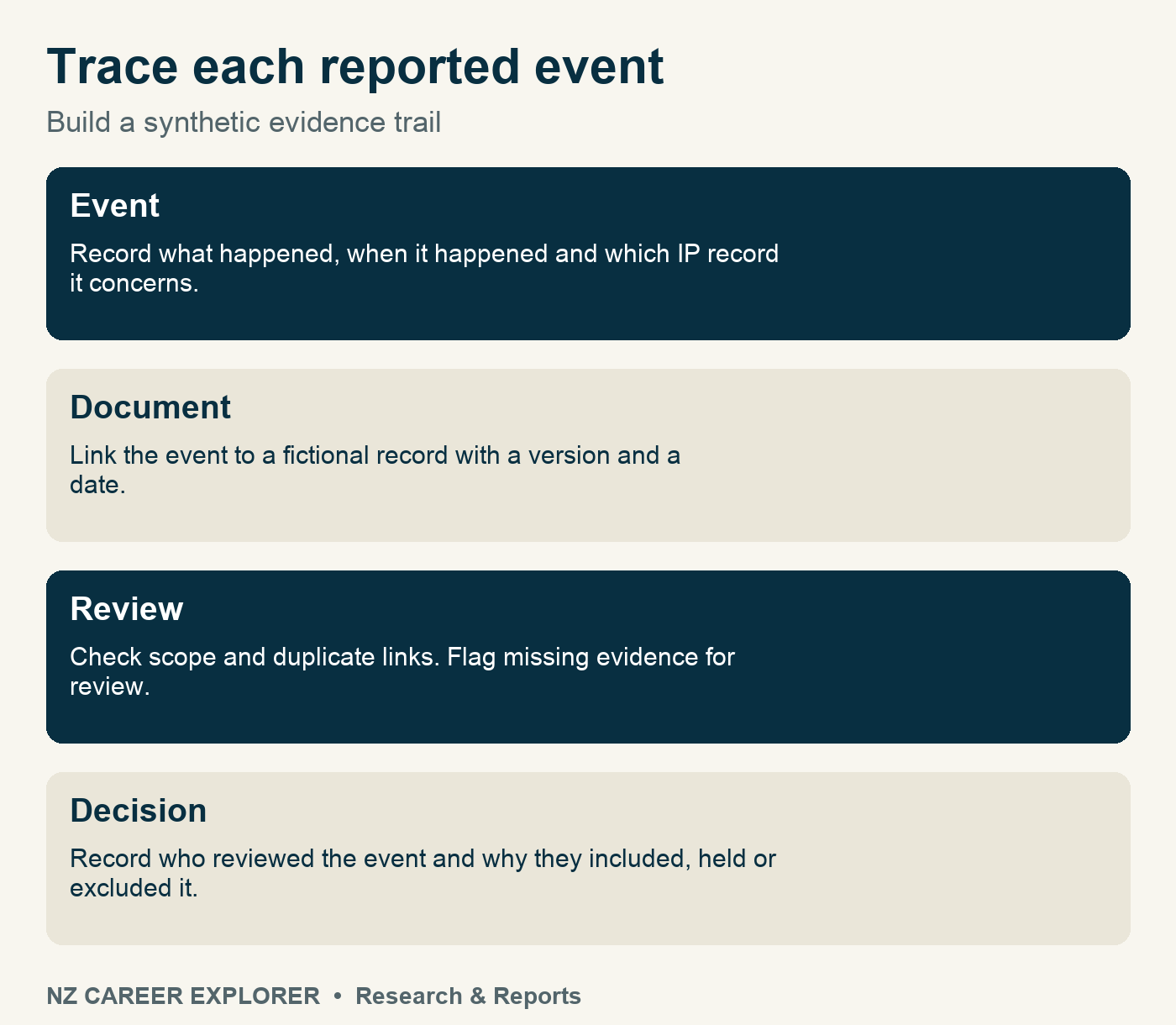
Start with an identifier for the event and a separate identifier for the intellectual property. Give each fictional document an ID and a version. Then add an event date, reported unit, value and reviewer question. Someone reading your example should be able to find the evidence for each number without having to ask what your spreadsheet means.
In the example register, an option and a later licence refer to the same fictional asset. The matching IP identifier prompts a duplicate review. TEC’s guidance explains that an option progressing to a licence or assignment can count as one transaction for the same IP. Record your review decision beside both rows so a colleague can check your reasoning.
Next, review the fictional investment row. It has a reported amount and an event date but no evidence reference. Mark the review unresolved and give the next reviewer a specific question. Similarly, record revenue and follow-on capital as separate measures with different labels, even when both are in NZ dollars.
Turn the checks into a portfolio explanation
Write a short note about what you checked. Explain how a stable identifier helped you find the linked records and what evidence would resolve the open item. If you change a date or review status, note the old value, the new value and why. This gives the next person a record of the decision.
Keep practice records entirely fictional. Remove confidential agreements, inventions, unpublished research and identifying details from anything you intend to share. For a separate example of tracing claims to sources, see our regulatory affairs evidence portfolio.
Finally, use the sample when an advert asks for record keeping, reporting or attention to detail. Say that you built an illustrative register and checked invented events for duplicates and missing evidence. For actual institutional reporting, the full official definitions, documentation and reviewer responsibilities govern the work.
Methods and downloadable tools
The charts reproduce the published component and transition weights from pages 6 and 7. The practice records, event identifiers and sums of money are fictional. They do not represent transactions at any university. The files let you review the source rules and try the checks on your own example.
Suggested citation: NZ Career Explorer, “Research Commercialisation Careers: Build an Evidence-Tracking Sample,” 18 November 2026. Funding measures and weights from TEC Commercialisation component guidance, version 1 November 2026, pages 5–8 and appendix.


