




Drivers Behind Rising Demand
Several interrelated factors increase demand for agronomists in crop production.
Producers and stakeholders seek specialized agronomic guidance more frequently.
Together, these drivers increase demand for skilled agronomy professionals.
Market Growth
Market expansion motivates producers to optimize crop performance.
Additionally, changing market expectations increase demand for technical agronomy advice.
Retail and supply chain needs often influence farm management decisions.
Effects on Staffing
Consequently, farms and businesses hire agronomy professionals to meet evolving needs.
- They support crop planning and input optimization.
- They advise on yield improvement and risk management.
Technology Adoption
Adoption of novel technologies changes agronomy roles and responsibilities.
Moreover, technology creates more data that requires agronomic interpretation.
Therefore, agronomists increasingly analyze information to improve decisions.
- They translate technical data into practical field actions.
- They guide adoption of new practices based on evidence.
Climate Variability
Greater weather variability increases uncertainty for crop production decisions.
Moreover, agronomy expertise supports adaptive management under changing conditions.
As a result, agronomists help design strategies to reduce production risk.
- They recommend flexible practices that respond to variable conditions.
- They assess trade-offs between yield and risk management choices.
Sustainability Expectations
Public and market expectations increase pressure for sustainable crop practices.
Furthermore, agronomists play a role in aligning practices with sustainability goals.
Personalized Career Consulting
Unlock your potential with expert career advice tailored to your goals. Get personalized guidance and actionable steps toward your dream career in New Zealand.
Get StartedThey design practices that consider soil health and resource efficiency.
Additionally, agronomists help balance production objectives with wider expectations.
Core Roles and Day-to-Day Responsibilities of Modern Agronomists in New Zealand Crop Production
Demand for agronomists has risen in recent years.
They design crop management strategies suited to field conditions.
They balance strategic planning with hands-on farm tasks.
Key Professional Roles
They advise growers on soil health and nutrient programs.
They identify pests and recommend appropriate disease responses.
They plan and oversee on-farm trials and evaluations.
- Design crop management strategies suited to field conditions.
- Advise on soil health and nutrient programs.
- Identify and recommend pest and disease responses.
- Plan and oversee on-farm trials and evaluations.
- Interpret field data and support decision-making.
- Liaise with growers and supply chain partners.
- Ensure compliance with relevant agronomic standards.
Routine On-Farm Tasks
Conduct regular field scouting to monitor crop condition.
Collect and document soil and crop samples for testing.
Assess crop stages to time operations effectively.
- Conduct regular field scouting to monitor crop condition.
- Collect and document soil and crop samples for testing.
- Assess crop stages to time operations effectively.
- Recommend adjustments to fertiliser and irrigation plans.
- Advise on pest and disease interventions during growing seasons.
- Supervise application of inputs and machinery operations.
Data and Trial Management
They design plots and trials to test practices or products.
They collect and manage agronomic data systematically.
They analyze results to refine recommendations for growers.
Transform Your Career with a Professional CV and Cover Letter
Stand out to employers with an ATS-optimized resume and tailored cover letter designed to match your dream role. Let us craft your job application materials for success!
Get Started- Design plots and trials to test practices or products.
- Collect and manage agronomic data systematically.
- Analyze results to refine recommendations for growers.
- Keep concise records to support traceability and learning.
Communication and Advisory Duties
Provide clear written reports and practical verbal advice.
They translate field observations into actionable recommendations.
They coordinate with farm teams to schedule and prioritise work.
- Provide clear written reports and practical verbal advice.
- Translate field observations into actionable recommendations.
- Coordinate with farm teams to schedule and prioritise work.
- Facilitate knowledge transfer and hands-on guidance for staff.
Operational and Compliance Responsibilities
Monitor input use and advise on efficient resource management.
Maintain records for regulatory and customer requirements.
Support risk assessments and crop protection planning.
- Monitor input use and advise on efficient resource management.
- Maintain records for regulatory and customer requirements.
- Support risk assessments and crop protection planning.
Skills and Practical Traits Emphasised
Apply critical thinking to solve practical crop challenges.
Work collaboratively with growers and industry partners.
Adapt daily tasks to changing field observations.
Agronomists connect technical knowledge with on-farm action.
Essential Skills for Aspiring Agronomists
Essential skills span technical knowledge, analytical ability, communication, and digital literacy.
Practitioners combine science knowledge with data skills and practical field methods.
These skills support effective decision making in crop production contexts.
Technical and Scientific Skills
Agronomists need strong technical and scientific skills.
Boost Your Career with a Standout LinkedIn Profile
Attract recruiters and expand your network with a fully optimized LinkedIn profile tailored to highlight your strengths and professional goals. Let your profile open doors to new opportunities!
Get OptimizedThey must understand crop physiology, soil properties, and pest interactions.
They should apply experimental design and field trial methods.
Analytical and Problem Solving Skills
Agronomists analyze data to inform management decisions.
Interpreting results from field observations and tests guides choices.
Practitioners diagnose problems and propose practical solutions quickly.
Interpersonal and Communication Skills
Agronomists communicate clearly with growers and team members.
They deliver actionable recommendations in plain language.
Negotiation and advisory skills support effective collaboration.
Digital and Technical Literacy
Agronomists use digital tools and data platforms.
They manage datasets and present findings visually.
Visual displays aid communication of technical data.
Qualifications and Training Pathways for Aspiring Agronomists
Qualifications include formal education, vocational training, and workplace learning.
Coursework and practical placements build foundational theory and hands on skills.
Postgraduate study and ongoing professional development deepen specialization and adaptability.
Formal Education
Many agronomists pursue tertiary education in scientific fields.
Coursework provides foundational theory and research skills.
Postgraduate study can deepen specialization and research capabilities.
Vocational and Practical Training
Hands on training through field placements strengthens practical competencies.
Internships and apprenticeships provide workplace experience and mentorship.
Supervised practical work builds confidence in real world settings.
Workplace Learning and On the Job Development
New agronomists learn rapidly through supervised tasks and projects.
Peer learning and team feedback accelerate skill development.
On the job experience refines practical decision making.
Continuous Professional Development
Practitioners should engage in ongoing professional development activities.
Short courses and workshops support targeted skill updates.
Lifelong learning helps agronomists adapt to evolving practices.
Choosing the Right Path
Assess career goals when selecting education and training routes.
Consider the balance between theoretical study and practical experience.
Seek mentors and workplace opportunities that align with your objectives.
Delve into the Subject: The Growing Opportunities in Farm Management Careers in NZ
Career Progression, Employment Settings and Job Prospects
This section outlines career progression, employment settings, and job prospects in crop production.
Agronomists can pursue multiple progression pathways within crop production.
Growing demand supports expanding job prospects across the crop sector.
Career Progression Pathways
Early roles build practical experience and technical competence in the field.
Those roles also involve hands-on problem solving and systematic data collection tasks.
Professionals may specialise in crop management, soil science, or integrated systems.
Advanced roles often include project leadership and strategic planning responsibilities.
Some agronomists later transition into consultancy, research, education, or policy work.
Employment Settings Across the Crop Sector
Agronomists find roles across diverse organisational settings in the crop sector.
- Farm businesses employ agronomists to support on-farm decision making.
- Agribusiness companies hire agronomists for product development and technical support.
- Consultancy firms engage agronomists to provide bespoke advisory services.
- Research organisations recruit agronomists to conduct applied crop studies.
- Government agencies offer roles focused on regulation and sector development.
- Educational institutions seek agronomists for teaching and training responsibilities.
- Non-profit organisations involve agronomists in sustainability and community projects.
Job Prospects and Transferable Opportunities
Consequently, roles span advisory, operational, and strategic responsibilities.
Additionally, agronomy skills transfer across crop types and related sectors.
Seasonal and contract work often provide practical entry points for newcomers.
Combining field experience with advisory skills enhances employability across settings.
Practical Tips for Navigating Career Development
Build varied on-farm experience to strengthen practical capabilities.
Network with peers and employers to learn about emerging opportunities.
Seek mentorship to gain guidance and accelerate professional development.
Furthermore, remain adaptable as crop priorities and employer needs evolve.
Learn More: The Role of Horticulturists in Boosting NZ’s Agricultural Exports
On-Farm Sustainability Practices
This section describes key on-farm sustainability practices.
Agronomists guide farmers using monitoring and adaptive management.
The focus includes soil, nutrients, pests, data, and farmer engagement.
Soil Health
Agronomists assess soil conditions to guide sustainable decisions.
They monitor organic matter, structure, and erosion indicators over time.
Additionally, agronomists recommend practices that support long-term soil function.
Furthermore, they encourage measures that increase biological activity and diversity.
Finally, agronomists track results and update recommendations as conditions change.
Nutrient Management
Agronomists develop nutrient plans tailored to crop needs and soil status.
They balance nutrient inputs to optimize plant uptake while reducing losses.
Additionally, they recommend timing and placement strategies for efficiency and safety.
Moreover, agronomists advise monitoring to adjust plans throughout the season.
- Planning and baseline soil testing inform nutrient decisions.
- Regular monitoring guides adjustments and risk reduction.
- Record keeping supports transparent and adaptive nutrient use.
Integrated Pest Management
Agronomists implement integrated pest management strategies on farms.
They emphasize monitoring pest populations and crop health.
Furthermore, agronomists use decision frameworks to determine control needs.
They recommend cultural, biological, and chemical options that minimize risk.
- Regular scouting detects early issues and informs timely actions.
- Thresholds guide interventions to avoid unnecessary controls.
- Non-chemical methods receive priority whenever practical.
Data, Monitoring and Adaptive Management
Agronomists collect field data to measure intervention effectiveness over time.
Consequently, they refine strategies based on observed outcomes and feedback.
Also, agronomists help set realistic monitoring protocols for ongoing evaluation.
Farmer Engagement and Implementation
Agronomists work alongside farmers to implement sustainable practices effectively.
In addition, they provide practical advice and on-farm demonstrations when appropriate.
Furthermore, they support record keeping and evaluation to inform future decisions.
See Related Content: The Role of Beekeepers in Supporting NZ’s Pollination Industry
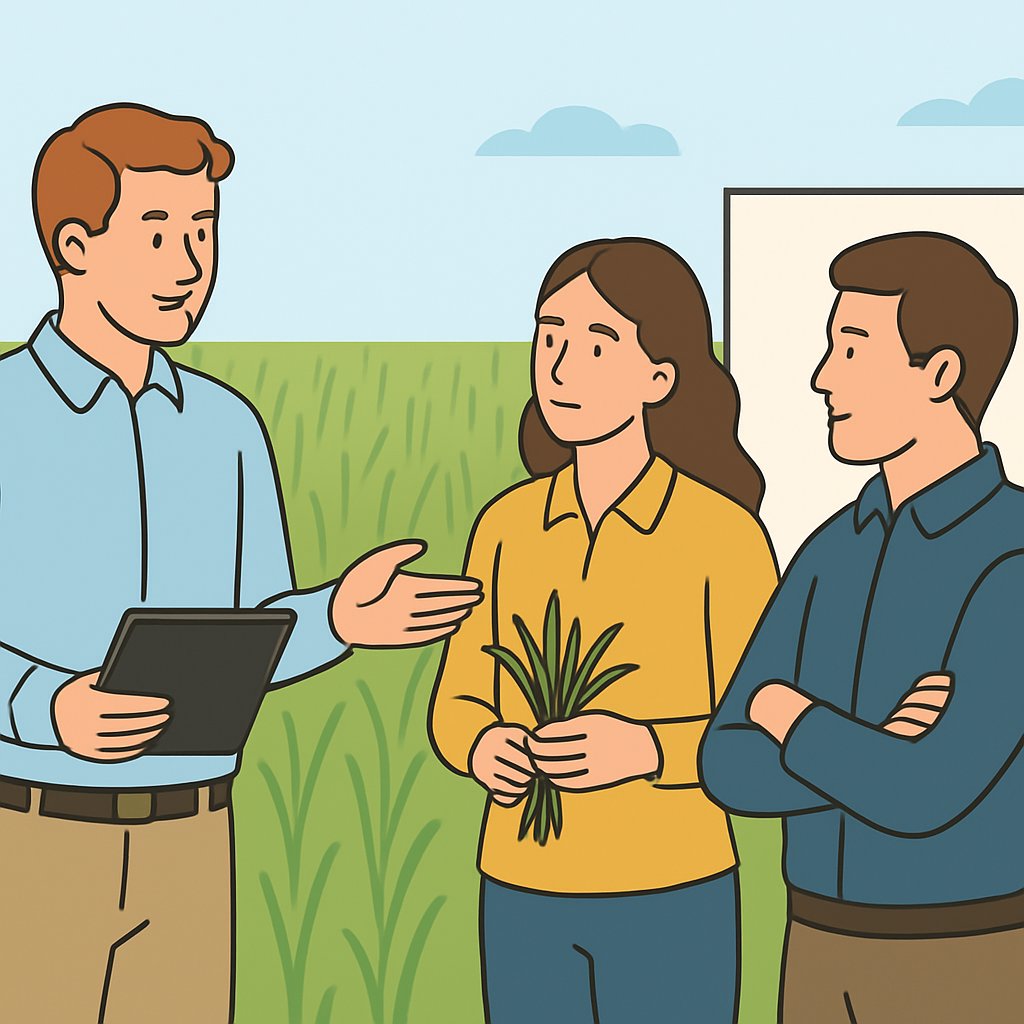
Opportunities from Precision Agriculture and Data-Driven Farming
Precision agriculture generates detailed field and crop information.
Agronomists can recommend more targeted interventions on specific areas.
Real-time monitoring enables timely responses to changing field conditions.
Enhanced Field-Level Decision Making
Consequently, agronomists can recommend more targeted interventions on specific areas.
Moreover, real-time monitoring enables timely responses to changing field conditions.
New Advisory Services and Business Models
Data-driven services open new revenue streams for agronomy practitioners.
For example, remote monitoring allows ongoing performance assessment and support.
Furthermore, subscription or outcome-based offerings can align incentives with farm goals.
Roles in Data Interpretation and Management
Agronomists can translate complex datasets into actionable field plans.
Additionally, they can validate data quality and contextual relevance for farms.
Moreover, collaboration with data specialists helps convert analytics into practical advice.
Research and On-Farm Innovation
Precision tools support iterative on-farm trials and rapid learning cycles.
Consequently, agronomists can test hypotheses and refine recommendations systematically.
Granular results can inform scaled practice changes across holdings.
Data Governance and Trust
Data use raises questions of ownership, access, and farmer consent.
Therefore, agronomists must advocate for transparent and fair data practices.
Moreover, building farmer trust supports long-term adoption of data services.
Practical Considerations for Implementation
Successful integration requires interoperable systems and reliable connectivity.
Additionally, teams should plan data workflows and decision protocols before deployment.
Lastly, continuous evaluation ensures tools remain relevant and effective over time.
Uncover the Details: Agri-Business Consultants: Growing Careers in NZ’s Farm Innovation
Key Challenges for the Profession
The profession faces several workforce challenges in crop production.
These challenges affect recruitment, retention, and daily service delivery.
Employers must respond to maintain consistent support for farms.
Labour Shortages and Their Effects
Labour shortages strain agronomy teams across crop production.
Consequently, staff must cover broader responsibilities during busy periods.
Additionally, limited personnel can delay on farm decision support.
As a result, service consistency can suffer over time.
Rural Recruitment Barriers
Recruiting agronomists to rural settings presents distinct barriers.
Geographic isolation limits candidate interest and access.
Housing scarcity often discourages relocation to rural areas.
- Geographic isolation limits candidate interest and access.
- Housing scarcity often discourages relocation to rural areas.
- Seasonal employment patterns reduce perceived job stability.
- Limited public transport complicates commuting options.
Workforce Retention Challenges
Keeping agronomists long term requires addressing retention challenges.
Professional isolation can erode job satisfaction.
High seasonal workloads increase stress and fatigue.
Insufficient local amenities can influence personal decisions to leave.
Additionally, unclear recognition pathways affect morale.
Employer Responses to Recruit and Retain Staff
Employers can take practical steps to improve recruitment and retention.
Flexible work arrangements can support better work life balance.
Enhanced workplace recognition and stronger team support systems improve retention.
- Offer flexible work arrangements to support work life balance.
- Enhance workplace recognition and team support systems.
- Facilitate community integration and local networking opportunities.
- Collaborate with local groups to broaden candidate reach.
Collaboration with Industry, Researchers and Regulators
Stakeholders form partnerships to address biosecurity and export requirements.
They establish clear roles and responsibilities for coordination.
They create governance arrangements to guide joint decision making.
Partnership Structures and Shared Governance
Partners design joint frameworks for shared decision making.
They define specific responsibilities to support coordinated action.
They adopt governance rules that clarify authority and accountability.
Operational Coordination for Biosecurity Response
Partners implement shared surveillance and monitoring for early detection.
Through clear protocols, partners agree on reporting for suspected threats.
Consequently, partners map rapid response roles and escalation pathways.
Aligning Research with Regulatory Needs
Researchers translate findings into practical guidance for compliance and export readiness.
Regulators clarify standards to shape research priorities.
Therefore, research outputs inform risk assessments and management options.
Export and Compliance Pathways
Industry, researchers, and regulators align on export and compliance protocols.
They coordinate documentation and traceability practices for verification.
Consequently, they streamline audit readiness and certification processes.
Capacity Building and Shared Training
Partners run joint training to ensure consistent compliance understanding.
They conduct simulation exercises to test preparedness and response coordination.
Additionally, they exchange practical feedback to improve protocols and training.
Data Sharing and Communication Mechanisms
Stakeholders set data sharing principles that respect confidentiality and usefulness.
Moreover, they maintain regular communication channels to coordinate actions.
Consequently, timely information flow supports risk reduction and compliance confidence.
Continuous Improvement and Policy Feedback
Partners review outcomes together and adjust practices accordingly.
They provide collective feedback to inform regulatory refinements.
Therefore, collaboration enables adaptive approaches to emerging challenges.
Key Collaborative Activities
This section highlights core collaborative activities among stakeholders.
These activities support detection, compliance, and coordinated responses.
They also strengthen capacity and policy feedback loops.
- Joint surveillance programs for early threat identification.
- Shared protocol development for export compliance verification.
- Coordinated emergency response drills and escalation rehearsals.
- Mutual capacity building through workshops and field sessions.
- Collective feedback loops for policy and practice improvement.


